SERVING MISSOURI
Smarter Land. Healthy Habitat.
You own or manage ground that matters to you. Pasture, timber, glade, hay ground, the place you hunt or the place you're bringing back. And that ground is never static — it's always moving through disturbance, recovery, decline, and renewal. Every decision made on it becomes part of that movement, whether intended or not. AeroTerraX Land Solutions is a land intelligence practice for landowners, producers, and conservation partners who want those decisions grounded in evidence, not assumption.
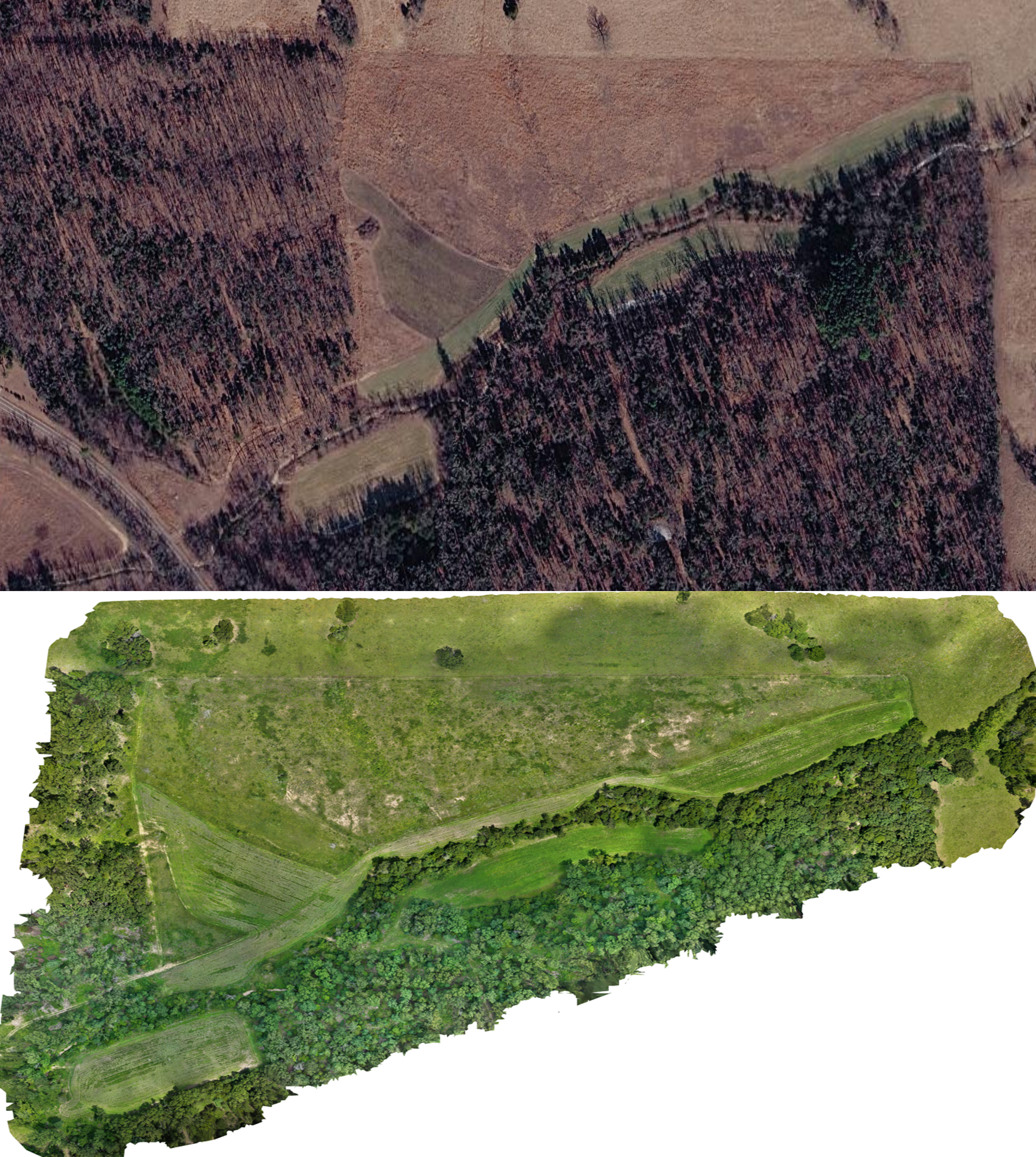
What's publicly available. What we capture.
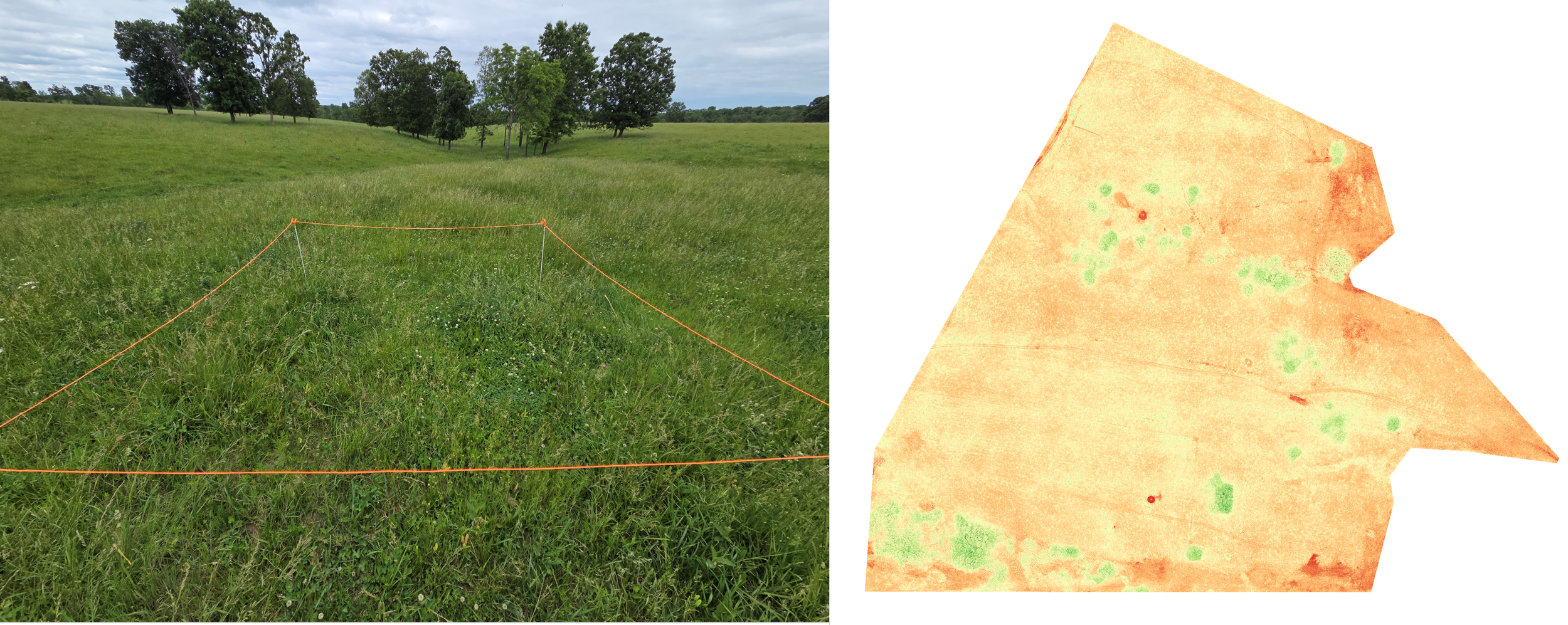
What you see. What the land is showing.
The Gap We Close.
Working Lands Are Variable. Recommendations Often Aren't.
Land management decisions get made every year on the tools that are available. A soil test from a composite sample. A seeding recommendation from a regional guide. A grazing plan written from a template. A burn plan drawn from memory. What worked on the neighbor's place. What the fertilizer rep said. Each of those is useful. None of them, alone or together, tells you what this specific ground is capable of supporting.
Meanwhile the land itself is showing what's true — in its terrain, its soils, its vegetation response, its water flow, its encroachment patterns, its ecological history. The Ozarks is an old landscape. The land remembers what happened to it. It also remembers what it is capable of becoming again.
The evidence is there. Most of the individual tools to gather it exist. What's often missing is someone whose job is to bring those tools together against a specific site, read what they show, and translate the picture into recommendations grounded in that ground.
That's the work AeroTerraX is built to do.
The Practice
Assessment Before Action. Evidence Over Assumption.
AeroTerraX Land Solutions serves landowners, producers, and conservation partners across Missouri. Field operations are concentrated in central and south-central Missouri, with engagements outside the primary service area scoped individually.
The work integrates high-resolution aerial imagery, LiDAR-derived terrain analysis, soil and vegetation characterization, and ecological site potential into site-specific recommendations you can defend — to yourself, to your family, to your lender, to an agency reviewer, or to the next steward of the ground.
The practice serves landowners restoring or stewarding grasslands and working lands, livestock and forage producers, and conservation partners and agency contacts across the region — and anyone whose ground calls for the kind of evidence-based analysis this practice was built to do.
The Path
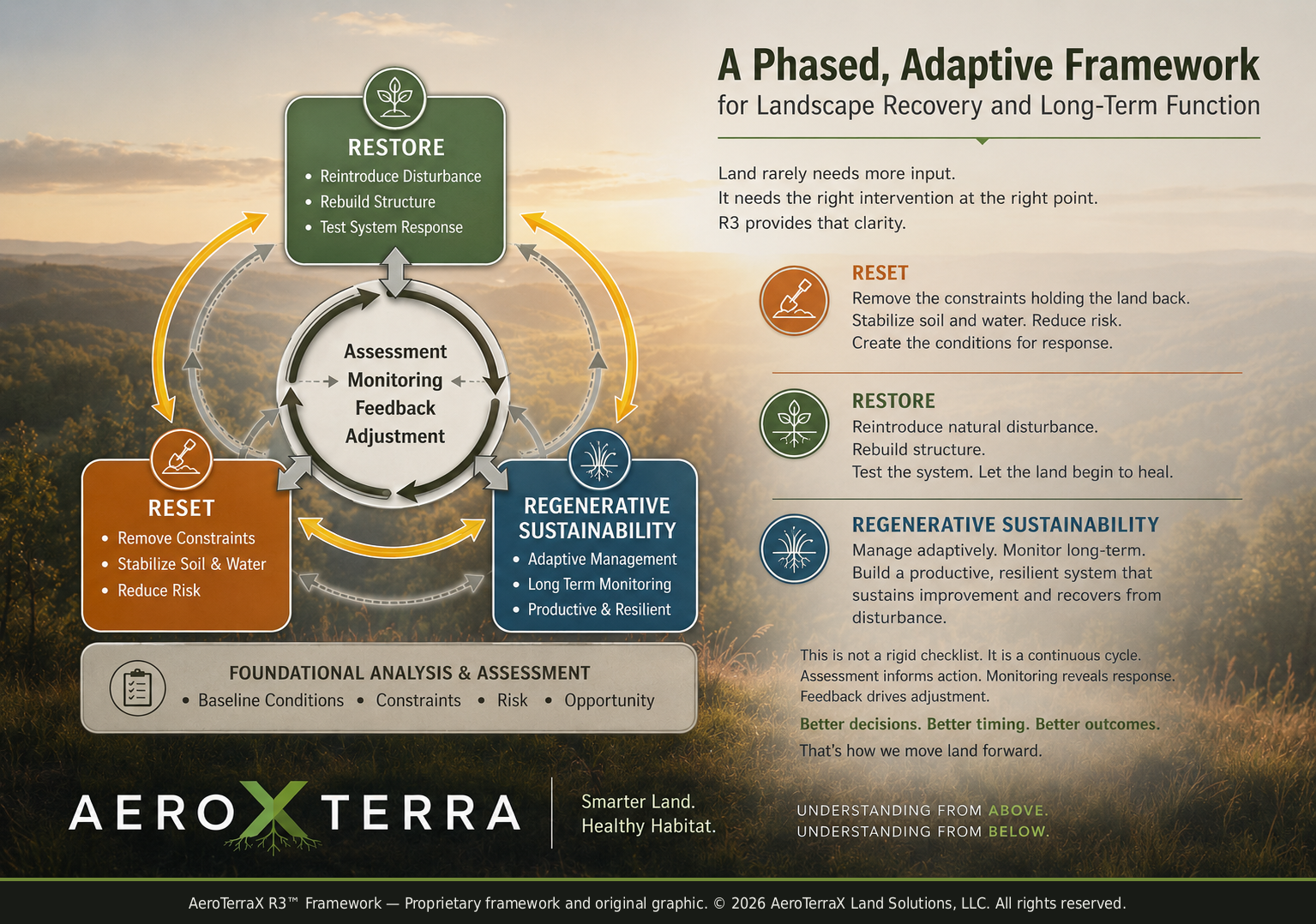
The R3™ Framework: Assessment First. Reset. Restore. Regenerative Sustainability.
Working lands don't get better by accident, and they don't get better all at once. Every AeroTerraX engagement begins with Assessment. What follows — Reset, Restore, Regenerative Sustainability — is the plan structure the Assessment reveals.
Assessment. Establish what the land is, what it could be, and where it currently sits. Terrain and hydrology from Missouri statewide LiDAR. Current-condition aerial imagery captured on-site, including multispectral bands for vegetation analysis. Soils from federal survey data and site-specific sampling. Ecological site potential — grounded in the reference community for the site and honest about where the documentation is provisional. Current vegetation state, infrastructure inventory, and land use history. Assessment is the analytical foundation. It determines which phases the plan needs and in what order.
Reset. Correct what's degraded.
Where the Assessment reveals conditions that are holding the land below its potential — fertility depletion, encroachment, erosion, degraded stand composition, deferred maintenance on infrastructure — Reset addresses them. Not every property needs Reset. When it does, the work is sequenced by what constrains what, and by what the land can support now.
Restore. Rebuild the land's function.
With degraded conditions corrected, Restore rebuilds the systems that make the groundwork. Soil biology. Appropriate stand composition. Fire regime where warranted. Grazing infrastructure that fits the terrain. Water systems where the flow analysis directs them. Recommendations grounded in what the ecological site can achieve.
Regenerative Sustainability. Sustain and improve.
Grazing plans, burn schedules, monitoring protocols, and adaptive decisions grounded in continuing evidence. Not a one-time report filed on a shelf. A working relationship with the ground, verified by monitoring, adjusted as the land responds. The phase where good management holds gains and continues to improve the site over years and decades.
Practice Areas walks through each capability the framework applies.
What This Looks Like
Decisions You Can Defend. Land That Improves on Its Own Time.
The end state is not complicated. Land that gets better under your stewardship. Inputs that produce what they're supposed to produce. Infrastructure sited where it belongs. Grazing systems that work with the ground instead of against it. Fire applied where it's warranted, held where it needs to be held. Encroachment addressed before it forecloses options.
And behind all of it: documentation. An Assessment you can carry into an agency meeting, a cost-share application, a family conversation, a sale. Recommendations grounded in evidence, sequenced by priority, honest about uncertainty. Monitoring that verifies whether the work is working.
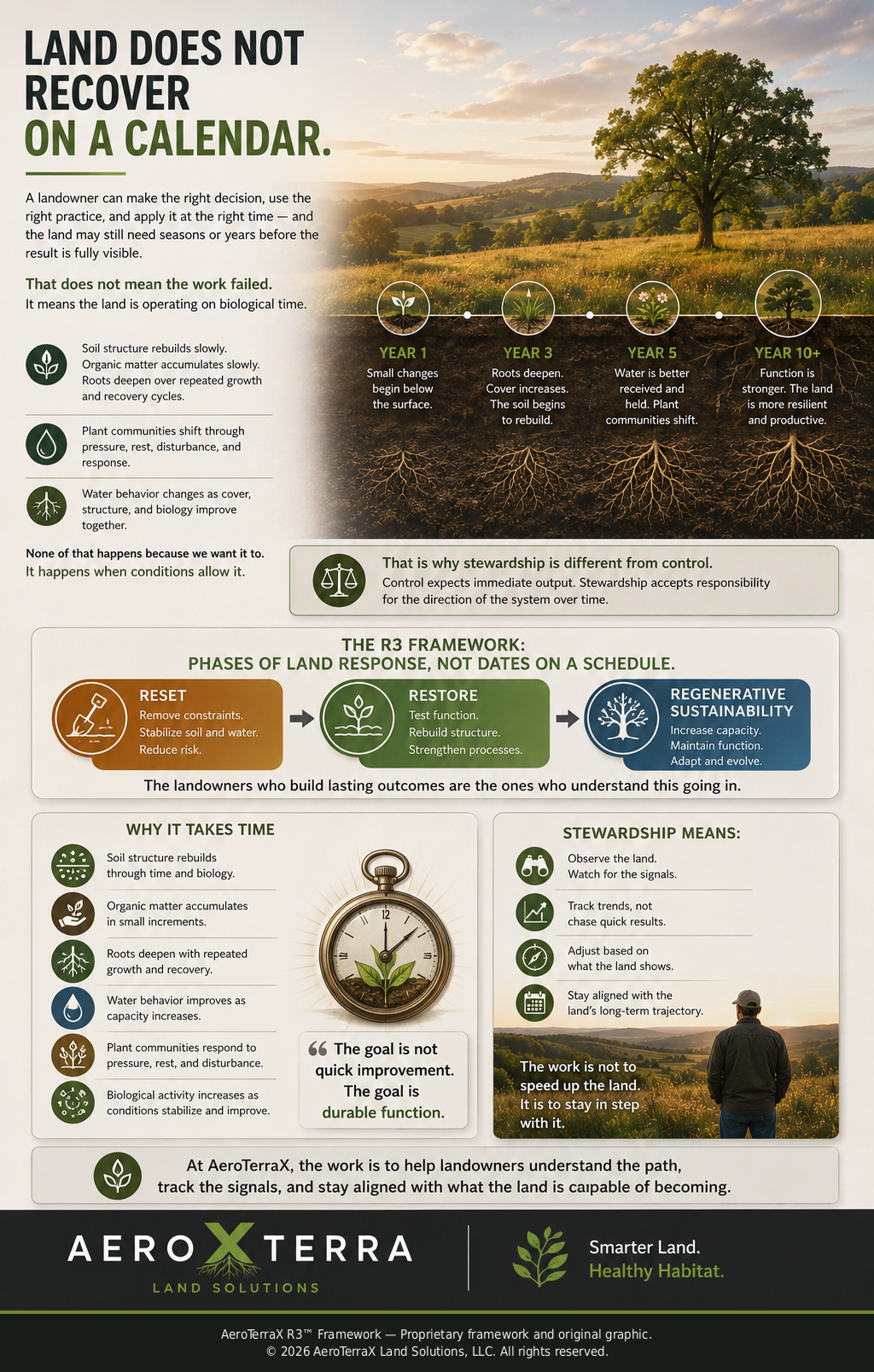
But the land does not recover on a calendar. Soil structure rebuilds slowly. Root systems deepen through repeated cycles. Plant communities shift over years. Stewardship means staying aligned with that trajectory — observing the land, tracking the signals, adjusting based on what the ground shows. It is different from control. Control expects immediate output. Stewardship accepts responsibility for the direction of the system over time.
Working lands that hold and improve.
Decisions the ground itself supports.